When the Museum Runs Onto the Field
Sports heritage, spectacle, and the people who keep memory from dropping the ball.
Museums are generally associated with stillness. Sport is anything but.
One whispers, “Do not touch.” The other urges us to run faster, jump higher, and cheer louder.
Yet both tell us something essential about who we are, what we value, and how we wish to be remembered.
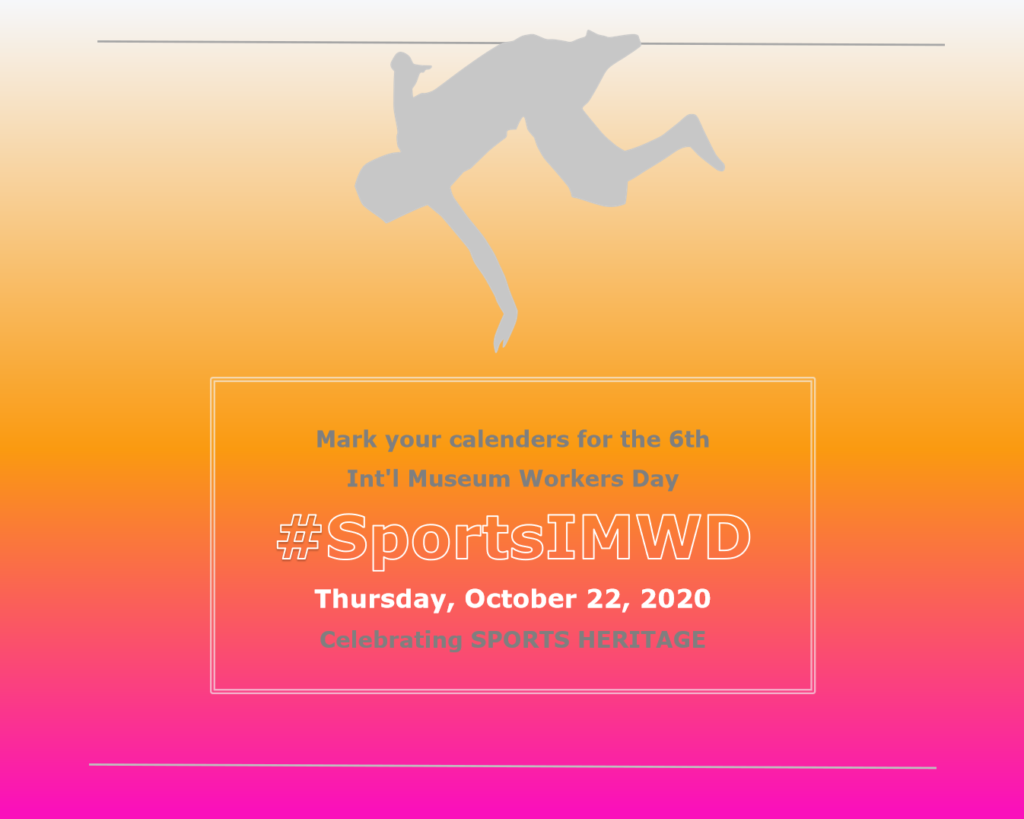
On October 22, 2020, the sixth International Museum Workers Day (IMWD), now International Museum Professionals Day (IMPD), celebrated this unexpected kinship through #SportsIMWD, in partnership with the Global Sports Heritage Association (GSHA).
The message was simple: sport is cultural heritage, and its history deserves to be preserved, studied, and celebrated.
Beyond Trophies and Heroic Calves
Sports heritage extends considerably beyond championship trophies, signed jerseys, and the occasional pair of historically significant running shoes.
Consider the Bronze Age fresco of young boxers from Akrotiri, ancient Greek depictions of wrestling, or Harold Edgerton’s remarkable twentieth-century photographs of a tennis swing.
Across centuries and cultures, sport has inspired art, shaped identities, created traditions, and recorded changing attitudes toward competition, gender, society, and the human body.
Its history lives not only in sports museums and halls of fame but in archaeological collections, art museums, photographic archives, and the memories of communities around the world.
The 2020 celebration also acknowledged UNESCO’s International Charter of Physical Education, Physical Activity and Sport, whose principles emphasize participation, inclusion, safety, and the fundamental right to physical activity without discrimination.
Sport, after all, belongs to humanity, not merely to its champions.
The People Who Preserve the Game
The timing of #SportsIMWD was particularly poignant.
In 2020, as the COVID-19 pandemic closed museums and emptied stadiums, the importance of our shared cultural experiences became unmistakable.
And behind the stories of sporting achievement stood another remarkable company.
Curators, conservators, archivists, researchers, educators, photographers, designers, and technicians work to preserve the objects, images, and narratives that connect sporting traditions to cultural memory.
Without their expertise, much of this history would simply disappear.
The sixth International Museum Workers Day celebrated not only the achievements of sport, but the professionals who ensure that its heritage endures.
Because when the final whistle blows, someone must make certain the story survives.
And that, ladies and gentlemen, is where the museum enters the field.