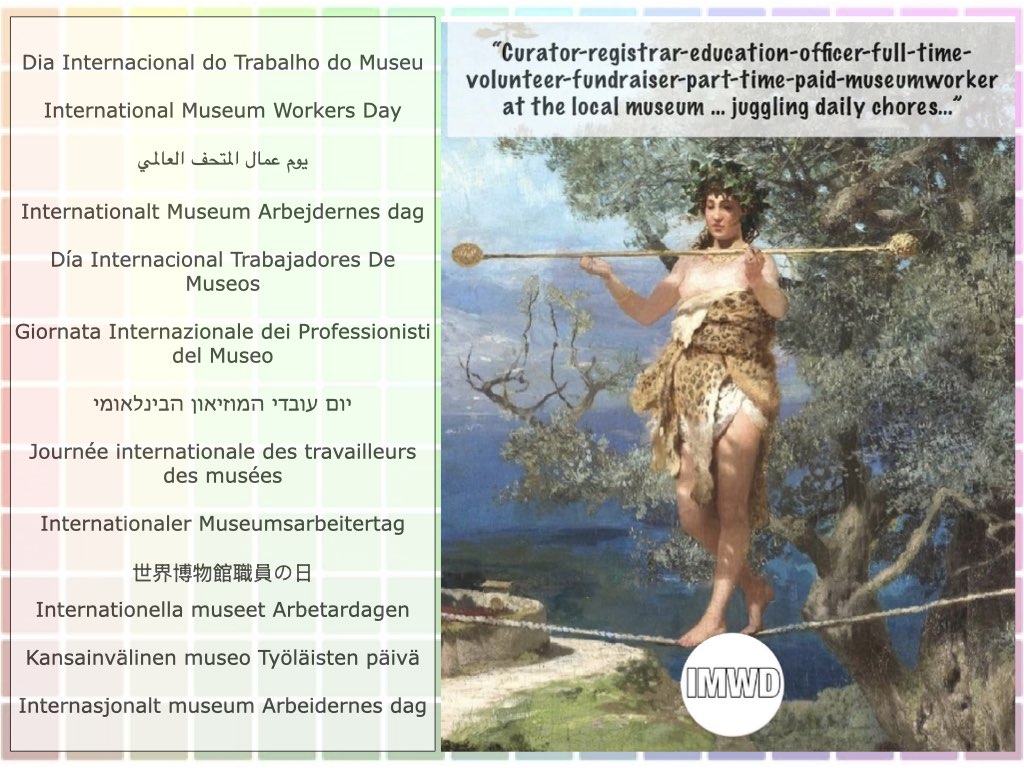
Heritage is made by human beings, not by magic tricks in climate-controlled rooms
Museums enjoy one of culture’s most elegant misunderstandings.
To the casual eye, they seem to run on stillness. Objects gleam. Labels behave. Lighting flatters. Meaning arrives with the poise of a well-trained butler. The whole arrangement suggests that heritage simply settles itself into place, as though vitrines fill themselves and exhibitions drift into being on a breeze of scholarship and tasteful typography.
Not quite.
Museums run on people. On judgment, nerve, patience, specialized knowledge, stamina, diplomacy, timing, repair, research, persuasion, and the daily choreography of making culture intelligible to the public. Behind every polished display stands an unruly and impressive cast: the people who move, study, conserve, interpret, design, install, explain, translate, edit, photograph, organize, and protect. Heritage, in other words, does not merely survive.
It is worked on.
That is where IMPD begins, and why it matters.
A Simple Mission with Excellent Aim
Founded in 2015 as a year-round advocacy initiative and annual event, the project began with a mission both simple and unusually important: to introduce the public to the myriad professions involved in the creation, research, discovery, and presentation of heritage.
From the start, it offered a correction to one of culture’s favorite bad habits: loving museums while overlooking the labor that makes them possible.
Its earliest title, beautifully earnest and just unruly enough to be unforgettable, was “Hug A Museum Worker.” One can admire the warmth of that impulse while also understanding why it had a limited shelf life. After two years spent clarifying that museum workers were not, in fact, inviting random physical demonstrations of gratitude, the initiative evolved into International Museum Workers Day. The rebrand was sensible. The spirit remained intact. The joke had simply learned to wear a better jacket.
More Than a Clever Idea
What makes the project more than a clever idea is the scale of its ambition.
This was never a matter of tossing a message into the digital wind and hoping social media did the heavy lifting. The project built an outreach model grounded in direct invitations to professionals, institutions, and associations across the world.
By 2017, heritage professionals in more than 150 countries had engaged with the initiative. By 2018, it had been marked in 21 languages, across 12 platforms, with participation spanning 170 countries.
Those figures are not merely impressive. They point to a serious feat of cultural organizing: recognition transformed into international practice, rather than left to wilt as a sentimental annual gesture.
Plainspoken Principles, Serious Method
Just as crucial is the project’s ethos.
Its published principles are refreshingly direct. It describes itself as multicultural and multilingual, grounded in inclusivity, unaffiliated with institutional alliances, unaligned with religious or political groups, open to strategic partnerships, and committed to independence.
This is not decorative language. It is a statement of method.
IMPD’s credibility comes from understanding something essential about heritage work: it is both intellectual and public-facing, both idealistic and practical, both collaborative and in need of clear boundaries. In that sense, IMPD is not simply an appreciation day. It is a shift in perspective. It asks the public to stop looking only at the object and start looking at the human infrastructure that allows objects, stories, and ideas to enter public life at all.
Then Sport Walks Onstage
This is precisely why the GSHA connection is so productive.
At first glance, museum labor and sports heritage may seem like neighboring tenants rather than housemates. But the Global Sports Heritage Association, founded in 2019, expands the argument in exactly the right direction. It frames sport not as culture’s rowdy cousin, but as one of its most revealing forms. Its mission is to promote sporting culture, history, and heritage across generations and around the globe, with equal emphasis on recreational sports and physical activity.
The proposition is elegant and overdue.
Sport is not a sideshow to heritage.
It is one of the ways heritage moves.
Then comes GSHA’s most useful line, one worthy of a brass plaque and a very decent spotlight: “Heritage is always about the future.”
There it is. The hinge.
That phrase rescues heritage from the sepia trap. It refuses the notion that heritage is merely a ceremonial storage unit for respectable nostalgia. Instead, it treats heritage as an active resource, something societies use to understand themselves, revise themselves, and imagine what should endure.
Read beside IMPD, the effect is electric. IMPD reminds us that heritage is made visible by labor in the present. GSHA reminds us that this labor does not merely preserve the past. It helps shape the future’s memory of itself.
Future Heritage Is Not an Accident
The working concept for GSHA’s Future Heritage Forum pushes that thinking further. It imagines a gathering point where sports, culture, design, finance, science, technology, architecture, urban planning, and heritage can meet without needing to apologize for one another.
Its central proposition is as sharp as it is generous: future heritage is not an accidental byproduct of progress. It is something worth identifying, debating, and building toward.
Heritage, under this view, is not only what we inherit.
It is also what we decide will deserve inheritance.
Enter the Silk Roads
This is where the story becomes especially rich for MUSEUMVIEWS.
The Silk Road materials make visible a broader ecosystem in which IMPD, GSHA, and MUSEUMVIEWS are already in conversation. Silk Road Week 2020, introduced by the China National Silk Museum together with the International Association for the Study of Silk Road Textiles and the Chinese Museums Association’s Committee of Museums along the Silk Road, framed its first edition around “The Silk Roads: Mutual Learning for future Collaborations.” The second edition in 2021 continued under the theme “Cultural Diversity and Sustainable Development.”
These are not merely handsome phrases for conference banners. They identify exchange, plurality, and future-mindedness as core heritage values.
Within that frame, MUSEUMVIEWS did something particularly smart. On International Museum Day in 2020, it launched “Silk Road Conversations with …”, a year-long transmedia program of interviews and activities rooted in the Silk Road as one of history’s great networks of diversity, mobility, and cultural encounter.
Conversation was the method.
Not pronouncement.
Not institutional throat-clearing.
Conversation.
The format itself carries a point of view: heritage becomes more alive when the people who make, study, and interpret it are allowed to speak in their own registers.
Sport as Archive, Memory, and Transmission
GSHA and the initiative entered that orbit not as decorative guests, but as intellectually natural partners. During Silk Road Week, they foregrounded the histories of sports whose roots and long cultural itineraries run through Silk Road geographies: cuju, martial arts, equestrian traditions, archery, wrestling, horse polo, board games, weight lifting, and more.
It was a slyly powerful move. It treated sport as archive, as transmission, as cultural memory carried not only in objects and texts, but in bodies, rules, rituals, spectatorship, and place.
That broader view also aligns with the values invoked through UNESCO’s International Charter of Physical Education, Physical Activity and Sport, which the 2020 sports-heritage materials explicitly acknowledge. The charter is presented there as a rights-based reference supporting policy and decision-making in sport, promoting inclusive access and ethical standards.
That matters because it clarifies the civic ambition underneath the entire constellation of projects. This is not heritage for ornament.
It is heritage linked to access, education, participation, dignity, and public life.
So What Is IMPD, Finally?
It is an advocacy platform, certainly.
It is an act of recognition.
It is a public correction to the invisibility of museum labor.
But in the fuller light cast by GSHA, Silk Road Week, and MUSEUMVIEWS, it becomes something larger and much more interesting: part of an argument about how culture is actually made.
Not by buildings alone.
Not by collections alone.
And certainly not by mythology.
By people.
People who keep the lights on, the objects safe, the ideas in circulation, and the public imagination from drifting into a comfortable coma. IMPD gives those people what they are too rarely granted in cultural life: not a passing thank-you from the wings, but top billing.